PERRA ANAK LANTING (BA18110487)
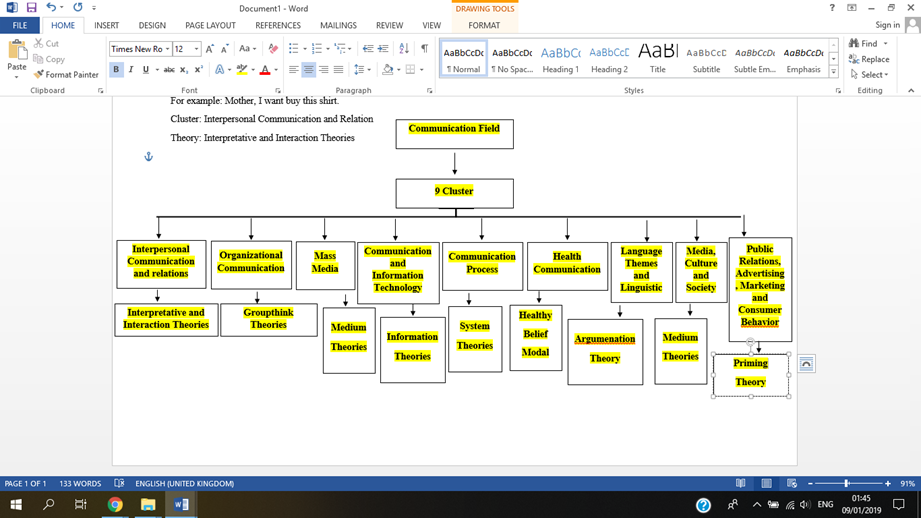
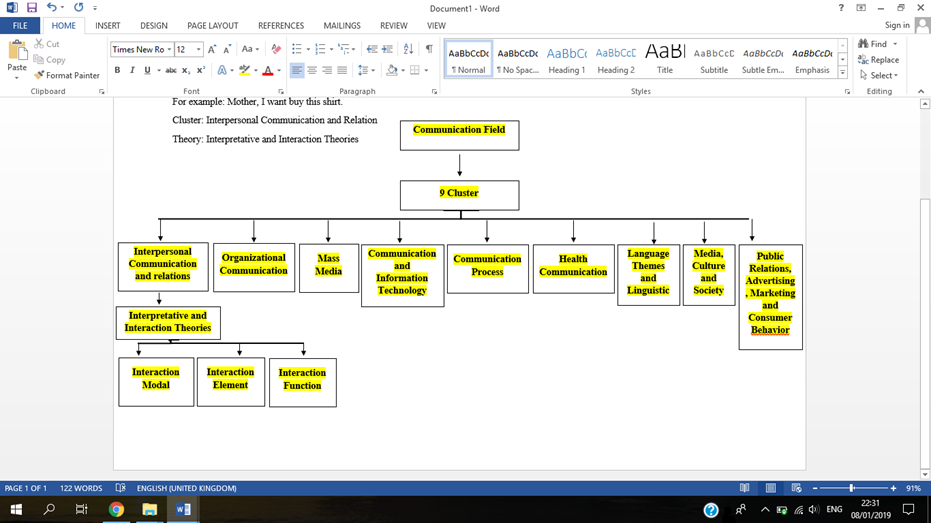
These theories are overview according to cluster
Interpersonal Communication and Relations
Attribution Theory (explaining human behavior)
ACT* Theory (explaining memory effects)
Argumentation Theory (how people argue)
Contagion Theories (explain networks members’ attitudes and behaviors)
Classical Rhetoric (effective use of languange: Persuasion)
Cognitive Dissonance Theory (attitude formation and change)
Elaboration Likehood Model (motivation and processing ability determine attitude change)
Expectancy Value Model (orientations to the world, according to expectations and evaluations)
Interpretative and Interaction Theories (all communication is based on meaning and interaction)
Languange Expectancy Theory (effects of linguistic variations on persuasive messages)
Network Theory and Analysis (how relationships influence behavior)
Sensemaking (managing life is about making sense)
Social Identity Theory (cognitive and motivational basis of intergroup differentiation)
Symbolic Interactionism (all communication is symbolic and based upon interaction and meaning)
Social Cognitive Theory (explanation of behavioral patterns)
Speech Act (understanding speaker’s intention)
Theory Of Planned Behavior/ Reasoned Action (explaining human behavior)
Uncertainty Reduction Theory (reduction uncertainty in behavior)
Organizational Communication
Adaptive Structuration Theory (role of information technologies in organization change)
Attraction-Selection-Attrition Framework (understanding organizational behavior)
Competing Values Framework (judging effectiveness of organizations)
Contingency Theories (influences of internal and external constraints in organizations)
Enactment Theory (how people act in organizations)
Framing in Organizations (media or people decide where people think about)
Groupthink (consensus-seeking tendency in groups)
Media Richness Theory (a medium fits with a task)
Network Theory and Analysis in Organizations (how relationships influence behavior)
Sensemaking (managing life is about making sense)
Structurational Theory (social structures are the medium of human activities)
System Theory (social units: Composition and Relation with environment)
Uncertainty Reduction Theory (reduction uncertainty in behavior)
Mass Media
Agenda Setting Theory (the creation of what the public thinks is important)
Priming (media effects)
Framing (media or people decide where people think about)
Cultivation Theory (television shapes concepts of social reality)
Dependency Theory ( media depends on the social context)
Hypodermic Needle Theory (direct influence via mass media)
Knowledge Gap (increasing gap between higher and lower educated people)
Media Richness Theory (a medium fits with a task)
Medium Theory (the medium affects perception)
Spiral of Silence (formation of public opinion)
Two Step Flow Theory (influence of media messages)
Uses and Gratifications Approach (explaining of media use)
Communication and Information Technology
Adaptive Structuration Theory (role of information technologies in organization change)
Computer Mediated Communication (to explain or predict media effects)
Contextual Design (designing user-centered ICT systems)
Diffusion of Innovations Theory (the adoption of new ideas, media, etc.)
Information Theories (‘bits’ of information in messages)
Minimalism (instruction for computer users)
Network Theory and Analysis (how relationships influence behavior)
Reduces Social Cues Approach (absence of social cues leads to lose individuality)
Social Identity Model of Deindivuation Effects (behavior changes in group)
Social Presence Theory (awareness of an interaction partner)
Uses and Gratifications Approach (explaining of media use)
Communication Processes
Framing (media or people decide where people think about)
Languange Expectancy Theory (effects of linguistic variations on persuasive messages)
Model of Text Comprehension (how people comprehend texts)
Network Theory and Analysis (how relationships influence behavior)
Priming (media effects)
Psycho-Linguistic Theory (use of languange has persuasive power)
System Theory (social units: composition and relation with environment)
Health Communication
Elaboration Likehood Model (motivation and processing ability determine attitude change)
Health Belief Model (explaining health behaviors)
Protection Motivation Theory (influencing and predicting behavior)
Social Cognitive Theory (explanation of behavioral patterns)
Social Support (exchange of assistance through social relationships)
Theory of Planned Behavior/Reasoned Action (explaining human behavior)
Transactional Model of Stress and Coping (coping with stressful events)
Languange Theories and Linguistics
Altercasting (altercasting)
Argumentation Theory (how people argue)
Classical Rhetoric (effective use of language: Persuasion)
Coordinated Management of Meaning (people construct meaning on the basis of exchanging rules)
Language Expectancy Theory (effects of linguistic variations on persuasive messages)
Model of Text Comprehension (how people comprehend texts)
Psycho-Linguistic Theory (use of language has persuasive power)
Speech Act (understanding speaker’s intention)
Media, Culture and Society
Altercasting (altercasting)
Domestication (domestication)
Cultivation Theory (television shapes concepts of social reality)
Dependency Theory (media depends on the social context)
Gatekeeping (regulate the flow of information)
Knowledge Gap (increasing gap between higher and lower educated people)
Medium Theory (the medium affects perception)
Mental Models (understanding phenomena’s in daily life)
Modernization Theory (effects of the modernization process on Human communication)
Spiral of Silence (formation of public opinion)
Public Relations, Advertising, Marketing and Consumer Behavior
Agenda-Setting Theory (the creation of what the public thinks is important)
Attraction-Selection-Attrition Framework (understanding organizational behavior)
Attribution Theory (explaining human behavior)
Cognitive Dissonance Theory (attitude formation and change)
Elaboration Likehood Model (motivation and processing ability determine attitude change)
Expectancy Value Theory (orientations to the world, according to expectations and evaluations)
Priming (media effects)
Semiotic Theories (interpretation of meaning)
Theory of Planned Behavior / Reasoned Action (explaining human behavior)
Uncertainty Reduction Theory (reduction uncertainty in behavior)





 TeoKom11